
From Make-A-Wish to Dream Job as a Screenwriter - A Leadership Talk with Anna Thorup
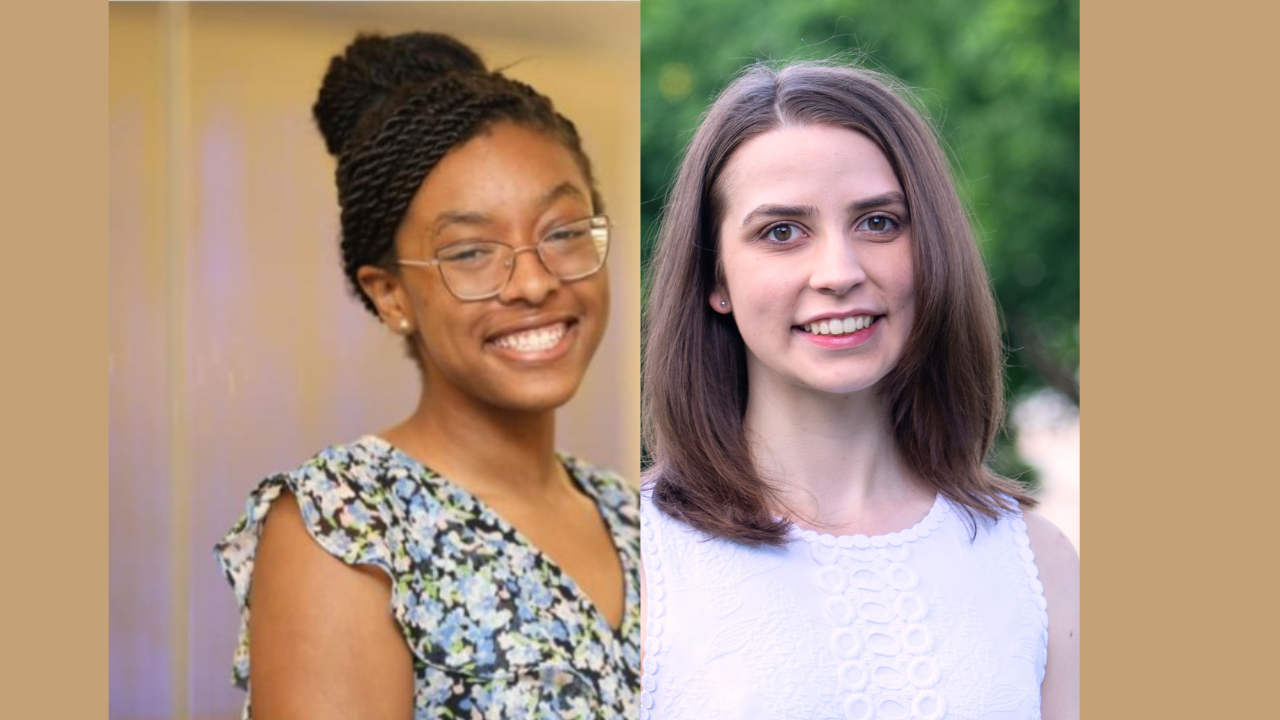

This past summer, FUTURE NOW Founder & CEO, Peggy Kim, hosted a Leadership Talk with screenwriter Anna Throup, whose unique screenwriting journey has taken her to companies such as DreamWorks Animation, Netflix, Apple TV, and others.
Thorup’s passion for media started at a young age in the suburbs of North Carolina. As a wheelchair user, she spent much of her time indoors reading and watching TV and movies, drawn to stories and storytelling.
“I was a real indoor kid growing up,” she told listeners. TV was her window into the world outside. When she was fourteen, Thorup was granted a wish from the Make-A-Wish Foundation and got the chance to visit the set of one of her favorite shows, The Office. The experience, she says, “cemented and clarified that this is what I wanted to do full-time.”
Thorup visited the set, met the cast, and interacted with various writers and producers on the show. When she returned home, she sought opportunities to sharpen her skills as a writer, attended screenwriting summer programs at the University of North Carolina School of the Arts, devoured the iconic screenwriting book Save the Cat, and eventually interned at Skydance in Los Angeles. She then moved to LA after graduating from Emerson College with a Bachelor’s degree in Visual Media Arts and Writing for Film & Television.
“It became clear that I was either going to go to New York or I was going to go to LA,” Thorup said. However, even after she moved to LA, she didn’t think she would stay for more than five years.
“I remember… I was in an Uber and my Uber driver [and I] were talking about how I just moved to LA and he said, ‘If you're here for seven years, you'll be here forever.’ And I remember thinking, ‘There is absolutely no way I'm going to be here for seven years.’ It was so big and so sprawling…I said, I'm going to, you know, build a career and then move back to the East Coast, move to New York. And it's been 11 or 12 years now. I think I am here forever.”
But it wasn’t all sunny in LA. For a year, Thorup didn’t have a job, which she described as “horrible and terrifying.” She eventually found script-reading jobs, where she wrote script coverage, summarizing and evaluating the story, characters, dialogue, structure, and marketability of the screenplay.
Thorup took a strategic approach to breaking into Hollywood. As a wheelchair user, traditional production assistant roles—demanding constant mobility and physical labor—weren’t practical. Instead, she pivoted to animation, a field where she could thrive at a desk and focus on creative work. “The minute I targeted and… planted that flag in what I wanted to do, opportunities started appearing,” she said. “It was much better than me coming out and just saying, ‘I will work anywhere, and I will do anything.’”
Eventually, Thorup came across an assistant position at DreamWorks Animation and reached out to a fellow Emerson alum to discuss her options. Though Thorup learned that the job had already been filled, she still arranged a coffee with the alum, who introduced her to the Human Resources department at DreamWorks. Soon after, she landed a job, serving as a “go-between” for the creatives and those in other departments and managing schedules, answering phone calls for producers and directors, taking notes, and handling production schedules.
The honeymoon period was short, however. Thorup explained, “While I loved the culture of DreamWorks and had a great time there [and] I'm very lucky that it was my first job, I very quickly realized that not being around creative work was not for me.”
After a year and a half, Thorup left her position at DreamWorks, wanting—or so she thought—to pivot and work in development. Thorup had read a Facebook post in a group for Hollywood assistants and again utilized her network to secure a job at Netflix as a writer’s assistant. But, while she interacted with writers daily, she was still “working in the corporate office, so the next step would have been a lower-level executive role in development.”
Though she knew deep in her heart that she wanted to be a writer, she convinced herself to stay in the job for the sake of stability.
“I remember one of my bosses pulled me into her office once and said, ‘I think you want to write.’ I was like, ‘No, this is exactly what I want. No, I don't. That's crazy.’
Even so, Thorup’s love for writing could not be contained. She came alive when she was reading scripts, meeting with writers, and sitting in on brainstorming sessions.
“I had thought about ways to leave and go right, and I was too scared to do them until I got laid off from Netflix and was forced to reconcile with what I actually wanted.”
Leaving Netflix forced Thorup to rethink and re-strategize, which prompted an idea for a script. “I took myself to New York for the summer for an ‘eat, pray, love’ summer of figuring out who I was. I thought about going to grad school, and I thought about working in publishing. Instead, I had time to write a script.”
The script was inspired by Thorup’s life experience as a wheelchair user in her early 20s, and she sent it to anyone who would listen, including her old boss at Netflix, and it caught the eye of Will Gluck, writer and director of 2023’s Anyone But You. One meeting later, Gluck said the magic words to Thorup: “We would love to work with you.”
Thorup soon found herself with a team behind her, including a showrunner from Netflix, who guided her through the process of pitching her script for the first time. Thorup did six or seven pitches via Zoom and was running out of steam. The very last place they went to pitch was at ABC, and there, they struck gold.
“I think [we] just, as sort of a Hail Mary, sent it over to them, and they asked to meet me, and we had a conversation, and they bought it, which was great. So then we got to develop it with them.”
It took five months to revise the script with ABC. Thorup explained that while some studios like ABC will buy shows “on pitch,” meaning there is no script, but things like characters, plot points, and general themes have been finalized. She recommends that aspiring writers have a script in hand when they go to a studio: “If you want to be a writer, you have to write a script, especially for first-time writers. They'll want to see that.”
Thorup shared that her writing process varies from project to project. “Some projects kind of walk into your brain almost fully formed, and it feels like magic, but most of the time that does not happen.” Often, a script starts with an idea for a single scene, and once she has a few pages written down, she will “go back and start being a little bit more analytical about it and write a pretty detailed outline.”
After drafting and outlining, she’ll send the script to her friends and industry peers for feedback and do another round of revisions.
“I do find, in some new writers, a fear of sharing their work,” Thorup said, “whether it's a fear of being vulnerable and putting themselves out there, which I totally get, or of this kind of fear that it will be taken.”
But, she explained that the industry lives and dies by collaboration and relationships, even between writers. It’s not just sitting alone and typing on a computer. Thorup “constantly” sends her own scripts to her friends and peers, who are more than happy to help.
Once a show is sold, collaboration becomes even more crucial. “You have to understand that it [the script] is no longer just yours.” Collaboration is key, and so is learning how to pick your battles.
“How do we want to move forward?” Thorup asked. “Do we want to… push back on that and explain to them why [we want to keep something] or do we want to… let them have this one and find a way to make this work and then do something else.”
Thorup has faced her share of obstacles and challenges in forging a career in Hollywood, but she has been smart, bold, and strategic in her approach, overcoming fear and imposter syndrome, and continually refining her skills while doing what she loves.
Recently, she was awarded The Inevitable Foundation’s Accelerate Fellowship, a six-month intensive that gives disabled film and television writers $40,000 grants and mentorship to develop a film or television spec script and get it ready to take to market. The program is supported by Netflix’s Fund for Creative Equity.
Sharing some final words of wisdom, Thorup noted how important building and maintaining relationships has been in forming the foundation of her career, whether it be with her Emerson College alums, old coworkers at Netflix, or studio heads at ABC.
“The motto that I've tried to operate under is… ‘Follow the good people and go where they go [because] good begets good.’ …That is how I've gotten every single job is just trying to be nice and build relationships. And that is so valuable in the industry.”


Comments