
Physical Media: A Thing of the Past?

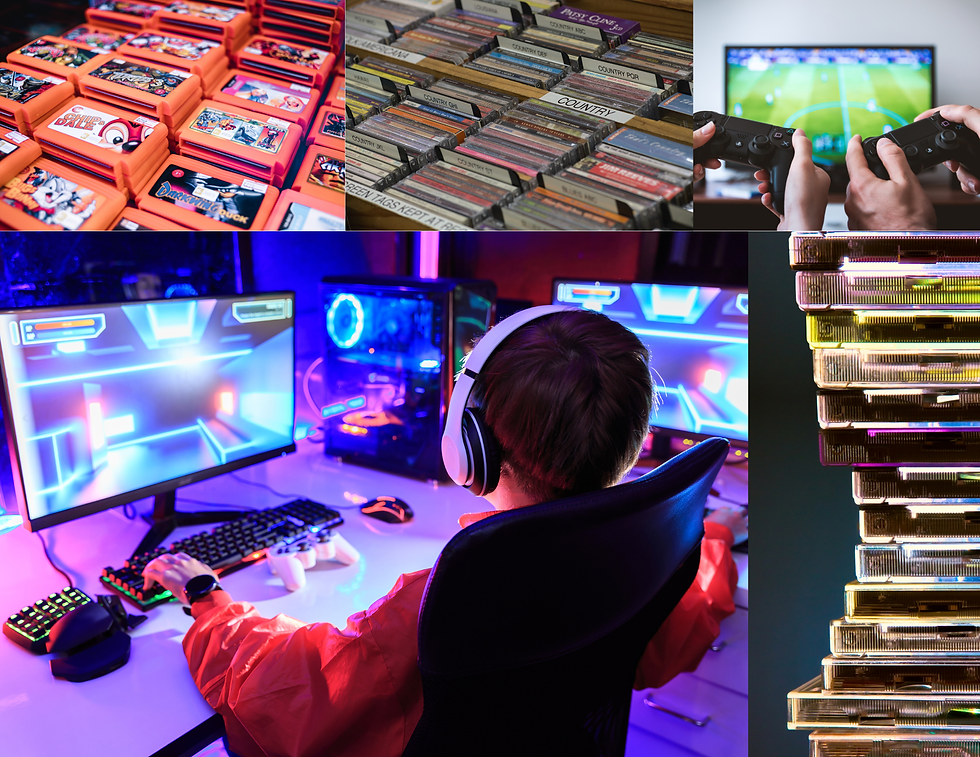
My childhood was defined by physical media. At home, I had a drawer filled with episodes of my favorite shows on DVD; I had the track numbers of my favorite songs on CDs memorized for road trips, and clicking a new game cartridge into my Nintendo DS was one of the most satisfying experiences for a 10-year-old me. Times have changed.
Streaming has become the predominant way to consume movies, television, and music; cars aren’t even manufactured with a CD player anymore, and physical video game sales are at an all-time low.
The modern media landscape is a digital one. With this comes unprecedented accessibility, exciting features like Spotify’s annual Wrapped playlists, and monthly streaming fees that seem to multiply year after year. For most, the ability to access a near-unlimited amount of content far outweighs the cost, but the reality is, media in the cloud can never be “owned” as physical media can. Our access to it depends upon the whims and well-being of the companies that provide it.
Nine PBS, a PBS affiliate, faced this harsh reality in March when its cloud storage provider, Open Source Storage (OSS), went out of business and it lost access to 70 years of archived content. When OSS and Iron Mountain, the company that owns the physical servers OSS was using, refused to return the data, Nine PBS responded with a lawsuit.
The conflict was resolved late this summer when a judge ruled that Nine PBS would regain access to its content but that it would have to pay Iron Mountain the current and overdue storage fees that OSS missed. This all could have been avoided had the station simply backed their content up on a physical hard drive, but at least their access will be restored–eventually.
A similar case of disappearing content occurred on September 1st; some PlayStation users logged in to their accounts to find that several movies they had purchased through the PlayStation Store had disappeared from their libraries without a trace.
This wasn’t because of a glitch, but rather business behind the scenes. Like a streaming service, Sony buys the licenses to third-party content from multiple distribution companies so they can put it on their platforms. In September, Sony’s licensing agreement with StudioCanal expired, and as a result, the 551 titles that were part of their deal had to be pulled.
Consumers have learned to expect this sort of thing when it comes to streaming, but when someone decides to “buy” a specific piece of digital content, there is an assumption of ownership, just as there is when one buys a record or DVD. In reality, when you “buy” digital media, you are really buying a revocable license to access it.
With that being said, the positives of digital media cannot be denied. Digital media eliminates hardware production and distribution costs, is always in stock, and can be limitless in its scale, not being bound by the storage capacity of a disc or cartridge. This convenience comes at the cost of the security physical media provides, but consumers can choose which they prefer…for now.
If industry trends continue, it is possible that companies will make digital the only way to enjoy their new releases. The transition is already underway. In July, Sony announced that it would end physical disc production altogether for PlayStation games come 2028. Currently, 82% of PlayStation’s game sales come from digital downloads, so from Sony’s point of view, the move makes financial sense; however, it also prevents players from ever owning their games. If Sony goes under or decides to stop supporting PlayStation, gamers will see their entire game libraries disappear, and PlayStation exclusive games will, ironically, become unplayable.
The other major players in the gaming industry, XBOX and Nintendo, also seem to be reevaluating their relationship with physical and digital media. With the release of the Nintendo Switch 2, Nintendo silently introduced the concept of “Game Key Cards.” Game Key Cards come in a box and take up shelf space like regular Nintendo games; the only difference is that the key card doesn’t actually have a game on it. When you put it in your console, it initiates a digital download, rendering the key card valueless. In essence, Nintendo is selling digital media using the aesthetics of physical media.
XBOX, on the other hand, is giving its users the best of both worlds. On August 26th, XBOX announced a feature that allows gamers to get a digital copy of the physical XBOX One and XBOX Series X games they already own while their physical discs continue to operate as normal. This will allow XBOX owners to carry over their games to future consoles and may eliminate the need for those consoles to be engineered with backwards compatibility, a feature that enables consoles to play physical games made for their previous generation(s). XBOX VP Jason Ronald describes this move as “an important step toward a future where players can have greater confidence that the games they buy remain with them for years to come.”
The reactions to this announcement were generally positive, but many gamers are still wary of the possibility that XBOX will also begin to phase out physical games. The most-liked comment on the r/gaming Reddit thread discussing this announcement states, "Keep in mind, at least for now, this is not a confirmation to maintain physical media…” (1.8K upvotes). Similarly, the second most-liked comment reads, “[I] Guarantee they will also be stopping disc production soon then, and this is their way of softening the blow” (1.3K upvotes).
Another important topic when discussing game preservation is that of “live service” games, or titles that are reliant on central servers to function. If a company decides the cost of maintaining a game’s servers outweighs the benefit of future potential sales, they can simply pull the plug and shut down the game. Recent examples of this include two PlayStation-centric titles: Concord (2024) and Highguard (2026), which lasted only two weeks and 45 days, respectively. The developers of these titles had their years of work erased in an instant, and players were left having bought an unplayable game. To Sony’s credit, they refunded the players who bought these titles on their platform, but had these games lasted just a few more months, it's possible they wouldn’t have.
The last bastion for physical media at this time seems to be collectors. A small but passionate sliver of the general market that has been growing in the past decade, but especially since the pandemic. In 2020, the DVD collection community on Reddit (r/dvdcollection) had about 50K members, but it currently stands at more than 440K. This increase in interest, however, doesn’t directly translate to sales, and the secondary (pre-owned) market accounts for much of collector commerce.
Another form of physical media that consumers seem to have a newfound interest in is vinyl. After enjoying its heyday all throughout the 20th century, vinyl sales fell to their all-time low in 2005 following the release of MP3 players like the iPod. Fast forward to last year, however, and vinyl was outperforming CDs by 14 million units. Vinyl sales are still nowhere near their glory days, but this still demonstrates a resurgence of interest in physical media. The fact that only 50% of vinyl customers actually own a turntable (according to a 2023 study) goes to show that the security and sense of ownership a physical object provides still has value, even if the object itself is rarely used.
So, where do we go from here? How can we avoid living in a post-ownership world where we pay to have the privilege of watching media until a company decides that we can’t? I have a few suggestions for both consumers and corporations.
For consumers: If you want to ensure you always have access to something, buy it physically (if you can); and if you are particularly passionate about media preservation and consumer rights, there are communities and movements you can join. The “Stop Killing Games” movement in Europe, for example, is pushing for legislation to prevent companies from intentionally designing games that can be shut down when convenient.
For corporations: First, be transparent about the risks that come with digital purchases. Make sure customers know they are buying a revocable license and outline the reasons why that license may be revoked. Don’t just hide this information in the fine print of your terms and conditions. If the cost of manufacturing physical media is truly too high, sell the physical version of your game/movie/album at a higher price, but keep the option open. Customers can decide for themselves if perpetual guaranteed access is worth an extra $10 or $20.
While we can never go back to the analog age, we don’t have to abandon it completely. At the end of the day, we are all consumers. Let’s make media that lasts, and leave people the option of owning the art that is important to them.
Sources:
IGN
Playstation
XBOX
Tom’s Hardware
Stop Killing Games
Statsignificant
Loudwire


Comments